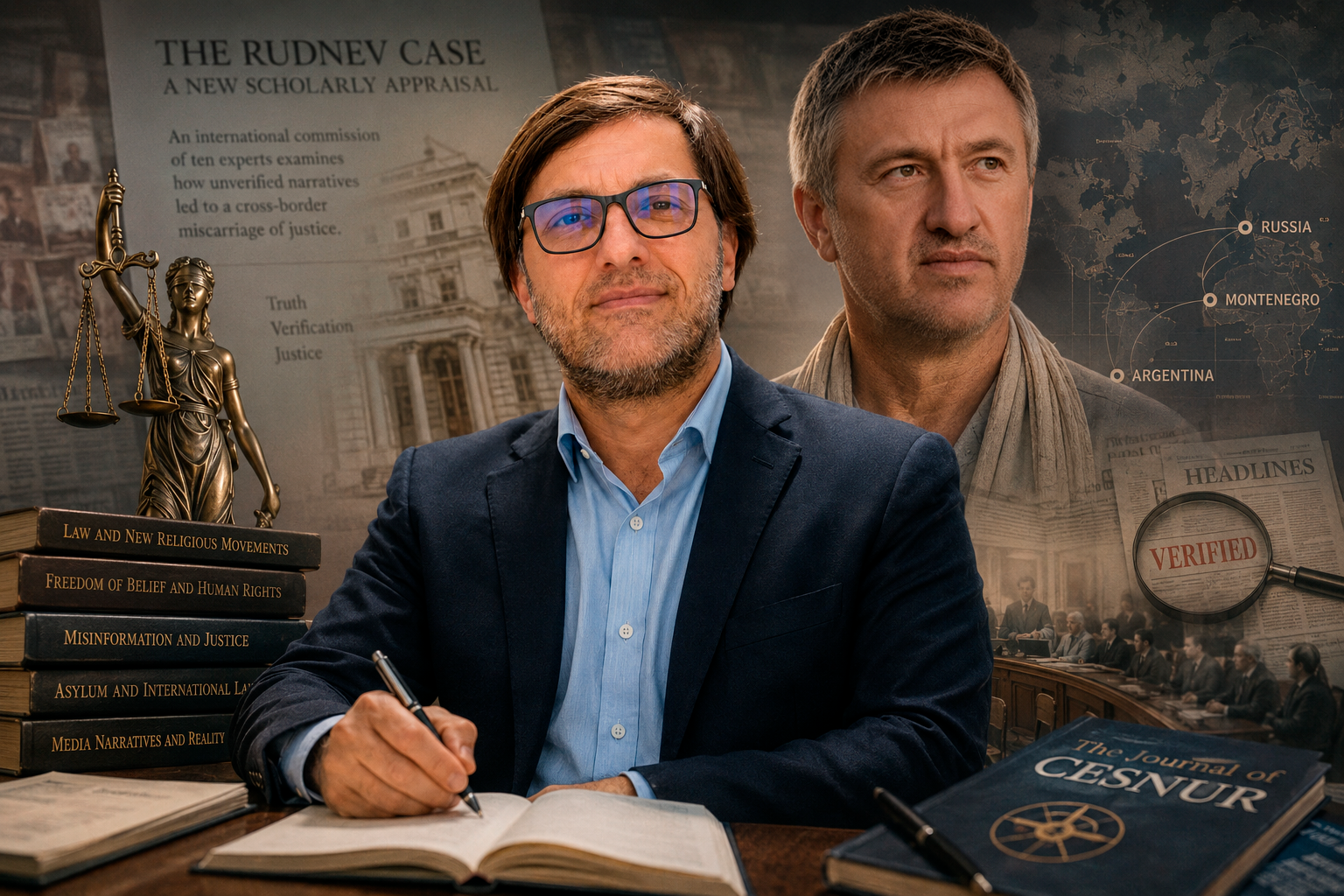


Konstantin Rudnev, whose case has drawn scrutiny far beyond Argentina.
Konstantin Rudnev’s case in Argentina remains controversial not only because of the charges against him, but because of the widening gap between the prosecution’s public narrative and the evidentiary questions raised by the defense, outside commentary, and public testimonies linked to the case. Once known in Russia as a spiritual teacher and critic of Vladimir Putin, Rudnev is now being held in Argentina in proceedings that have increasingly become a dispute over whether media stigma, inherited accusations, and politically loaded narratives have outrun the factual record.
According to Rudnev’s defense and public supporters, the Argentine case cannot be separated from the political and reputational baggage attached to his name long before his arrest. In that reading, his earlier imprisonment in Russia and the persistent use of “cult” narratives helped create a framework in which suspicion traveled ahead of proof. That interpretation remains contested, but it is central to the defense-side understanding of why the case has resonated beyond Argentina. That broader framing also appears in public presentations describing the proceedings as a wider international legal controversy.
A Serious Prosecution Still Fighting Over Basic Proof
One of the most persistent problems for the prosecution’s public case is the continuing dispute over what hard evidence actually supports the accusations. Rudnev was arrested in a high-profile operation and quickly linked in public reporting to human trafficking, coercion, and drug-related claims. But a defense-assembled case archive argues that the evidentiary basis for those allegations remains far weaker than the headlines suggested, including by pointing to official testing that, according to that account, did not confirm prohibited narcotics in the seized substances.
That point matters because one of the most inflammatory elements of the early public narrative was the drug allegation. If technical examinations did not sustain that claim, then one of the prosecution’s most sensational pillars weakens immediately. The same defense-linked materials also argue that the trafficking narrative remains unstable because no clearly established victim has consistently upheld it in the terms first presented to the public. These are not final judicial conclusions, but they have become central to the dispute over whether the case rests on concrete proof or on a theory reinforced by repetition and early public certainty.
This is what gives the Rudnev matter significance beyond a routine prosecution update. The key issue is no longer only what was alleged at the outset, but whether those allegations have been supported by evidence strong enough to survive strict legal scrutiny. In a case with such intense exposure, that distinction becomes decisive. A criminal file is supposed to be built on verifiable facts. If instead it matures first as a narrative and only later seeks evidentiary support, the legitimacy of the process itself comes under pressure.
How a Hospital Episode Expanded Into a Criminal Narrative

Svetlana Komkova during an interview on Radio Comunas AM with Gabriel Russo
A central strand of the Argentine case concerns the hospital episode involving Elena Makarova, a young Russian woman whose childbirth and related paperwork became one of the triggers for official suspicion. In the public narrative that followed, the incident was framed as part of a broader pattern involving document irregularities and human trafficking. But accounts from inside that episode sharply challenge that interpretation.
According to Svetlana Komkova, who acted as Makarova’s interpreter, the issue began with a mistake in the child’s surname on hospital documentation. In her version, what should have remained a routine correction was later transformed into an accusation involving identity falsification. Defense-linked materials go further, arguing that the original suspicion grew from misunderstanding, overinterpretation, and the conversion of ordinary events into supposed indicators of criminal intent. If accurate, that makes the hospital episode more than a minor procedural detail. It becomes a disputed foundation for a much larger accusatory structure.
That matters because if the hospital incident truly served as the trigger for the wider case, then the reliability of that trigger becomes central rather than peripheral. The more the defense can argue that early assumptions were built on error, cultural misreading, or second-hand assertions later amplified into prosecutorial logic, the more pressure falls on the legitimacy of the case as a whole.
That matters because if the hospital incident truly served as the trigger for the wider case, then the reliability of that trigger becomes central rather than peripheral. The more the defense can argue that early assumptions were built on error, cultural misreading, or second-hand assertions later amplified into prosecutorial logic, the more pressure falls on the legitimacy of the case as a whole.

Elena Makarova later publicly disputed the role assigned to her in the prosecution’s narrative.
The Alleged Victim Who Rejected the Prosecution’s Role
One of the most serious contradictions for the prosecution’s public framing is the position attributed to Elena Makarova herself. In a publicly released video statement, Makarova has said that she was not a victim of Konstantin Rudnev and has instead described herself as harmed by the actions of Argentine authorities. If the person most visibly presented as an alleged victim rejects that role, one of the central pillars of the trafficking narrative becomes far harder to sustain in public discussion and potentially in court as well.
The defense has used that contradiction to argue that the case hardened too early around assumptions rather than stable proof. In that reading, the prosecution’s story was not assembled patiently from verified evidence, but formed first as a narrative and then reinforced through selective interpretation, public pressure, and a media environment already primed to accept a “cult” label as self-explanatory. That does not settle the case legally, but it explains why the matter has taken on broader significance. The dispute is no longer only over individual charges. It is over whether an entire accusation was assembled around a pre-formed story rather than carefully tested facts.
This wider concern has also drawn in outside commentary. Writing in Bitter Winter, Italian sociologist of religion Massimo Introvigne argues that “cult” labels can be weaponized through repetition, stigma, and public fear in ways that make implausible accusations appear plausible. Whether one fully accepts that interpretation or not, it clearly overlaps with the defense reading of the Rudnev case, where reputational damage and legal jeopardy appear to have advanced in parallel.
The Human Cost of a Case Still Under Review
Whatever the final legal outcome, the human cost of the proceedings has become harder to ignore. According to defense-linked accounts, Rudnev’s health has deteriorated seriously during detention. Those materials say Argentine doctors Dr. Luis Ernesto Sarotto and Mariano Duarte stated during a hearing that he had lost 52 kilograms in custody and that his condition reflected a serious pathology. In that presentation, continued detention ceased to look like a neutral procedural measure and instead became part of the argument that prolonged incarceration now poses a growing threat to his life and health.
Family members have publicly echoed those concerns, describing a steady worsening of Rudnev’s condition as the proceedings continue. That part of the case matters because it strips away the abstraction of legal argument. What is at issue is not merely the interpretation of evidence, but the lived consequences of a prosecution that remains unresolved while detention continues and health reportedly declines.

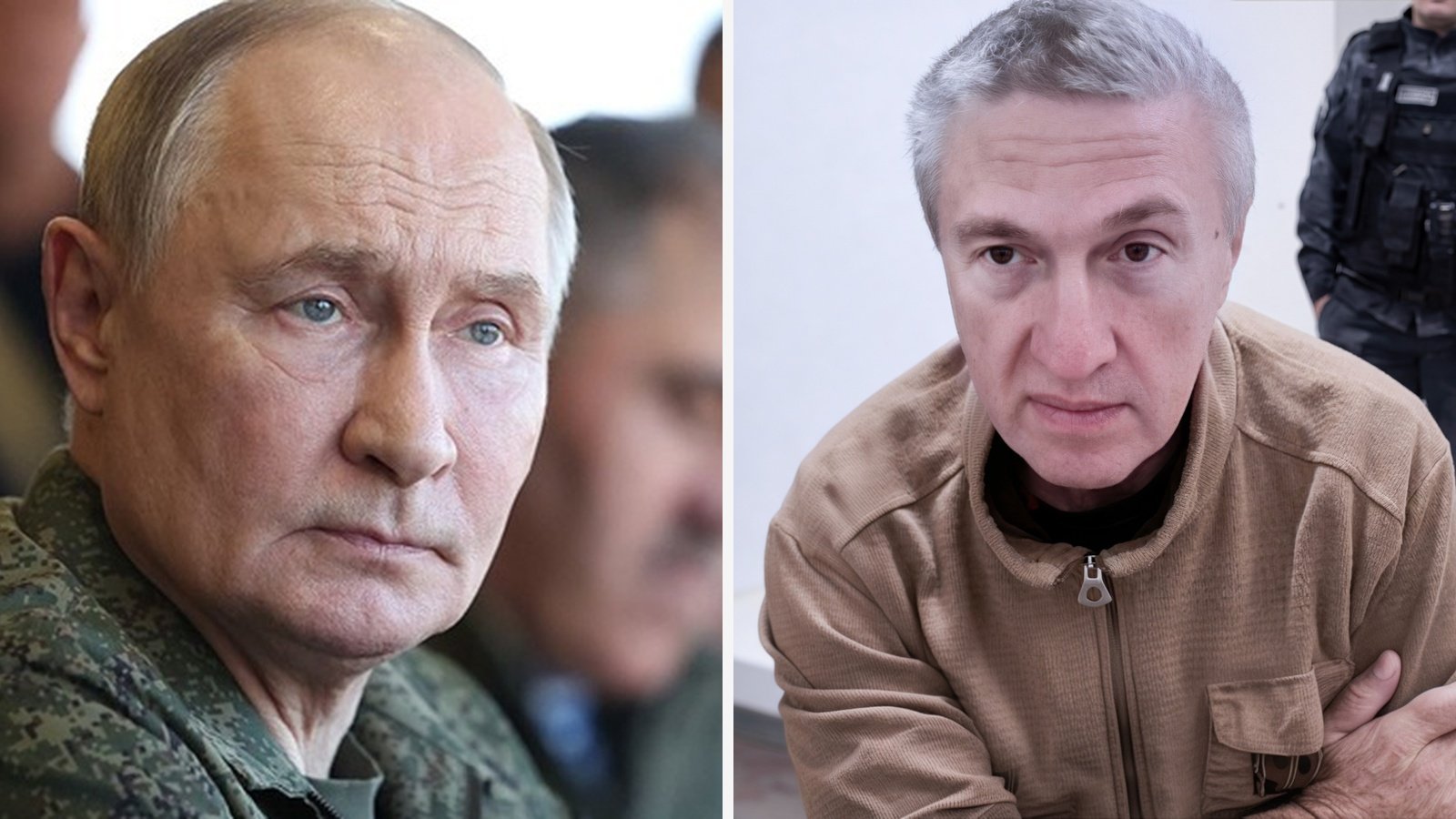
Photos of Konstantin Rudnev during his flight to Argentina and after his detention
At its sharpest point, the Rudnev case now presents two competing narratives. On one side is a prosecution story built around trafficking, coercion, and dangerous influence. On the other is a defense narrative built around weak evidence, a disputed victim framework, media contamination, and the claim that a politically marked dissident has once again been pushed into detention through a story stronger in headlines than in proof. The courts will decide which account survives legal scrutiny. But one conclusion is already difficult to avoid: the case remains deeply contested, and the central question is no longer only what has been alleged about Konstantin Rudnev, but whether those allegations have actually been proven strongly enough to justify all that has followed.