
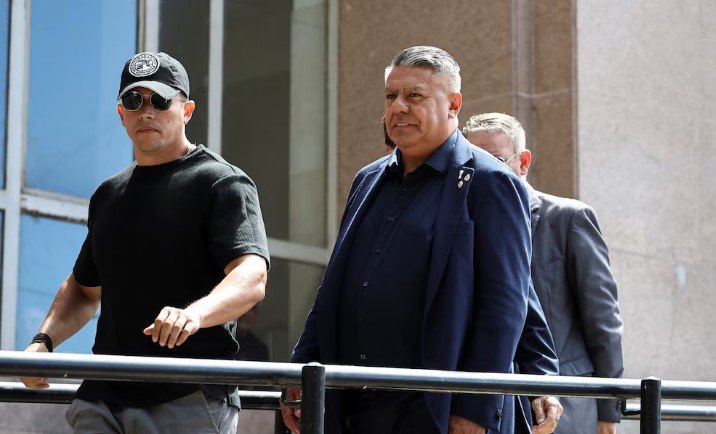
Claudio “Chiqui” Tapia left the courthouse last week after being questioned in the AFA tax-withholding case, without answering questions.
A prosecutor before Argentina’s National Economic Criminal Appeals Chamber has argued that the case against Argentine Football Association president Claudio “Chiqui” Tapia, treasurer Pablo Toviggino, and other defendants should remain open. In a filing to the appellate court, Prosecutor General Gabriel Pérez Barberá rejected the defense request to dismiss the proceedings and asked the judges to uphold the lower court’s decision not to close the case.
The investigation began after a complaint by ARCA, Argentina’s revenue and customs agency, over the alleged non-deposit of funds withheld by the AFA for VAT, income tax, and social-security contributions between 2024 and 2025. According to the accusation, the unpaid amount is around 19 billion pesos.
The defense argues that no crime exists because the Economy Ministry had suspended certain tax-enforcement procedures for some entities, including civil associations. In that view, the debt could not be treated as legally due during that period.
The prosecutor disagreed. He argued that if the AFA withheld money that did not belong to it and failed to transfer it to the state on time, that legal duty did not disappear simply because some collection procedures had been paused. In his view, the deadlines still expired, and the funds were still not deposited when the law required.
The Prosecutor Says a Pause in Collection Did Not Cancel the Obligation
In his opinion, Pérez Barberá said the defense was mixing up two separate issues: whether the obligation to pay existed, and whether the state was temporarily using all of its tools to collect the debt.
That distinction is central to the case. According to the prosecutor, a tax obligation becomes due when the legal deadline passes. A temporary suspension of enforcement measures may affect how the state collects the money, but it does not erase the obligation itself.
He also stressed that the case is not about the AFA’s own unpaid taxes in the ordinary sense. It is about money that was allegedly withheld from third parties and then not transferred to the state. For that reason, he argued, the duty to deposit those sums carries special legal weight.
From that perspective, the temporary suspension of collection measures did not make the debt vanish and did not remove the possible criminal relevance of failing to hand over money already retained from others.The appellate court’s Chamber A, made up of Judge Carolina Robiglio and Judge Roberto Hornos, had planned to hear oral arguments. Instead, the parties submitted written briefs. No ruling was expected before March 25 after one of the defendants requested, and received, more time.
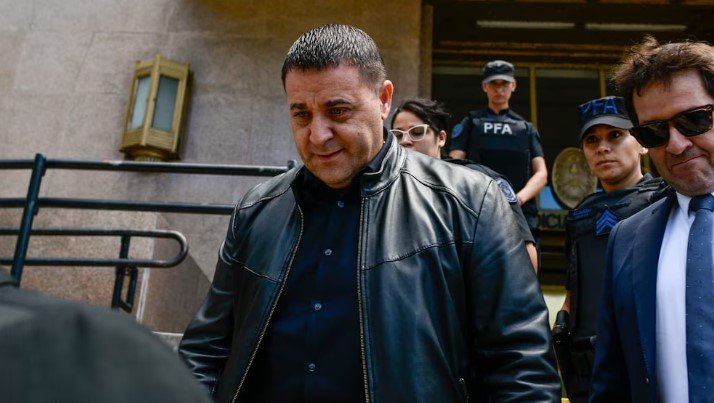
Pablo Toviggino at the courthouse last week, where he was questioned in the AFA withholding case.
The Case Is Still at a Key Procedural Stage
All five accused members of the AFA executive committee have already been questioned by Judge Diego Amarante. In each case, they submitted written statements, asked for the case to be dismissed, and declined to answer questions. The judge must now decide whether to indict them, issue a lack-of-merit ruling, or remove them from the case.
At the same time, the appellate court still has to decide whether the defense is correct in arguing that no crime existed at all. That is the dispute in which the prosecutor has now stepped in and formally asked for the investigation to continue.
One of the key points in Pérez Barberá’s filing is that there was never any true extension of the payment deadlines. He argued that the rules cited by the defense did not postpone the due dates. They only affected the use of certain administrative collection tools by the tax authority.
In other words, the prosecutor’s position is straightforward: the deadlines remained the same, the obligation remained in force, and the alleged failure to deposit the retained sums still matters legally.
He also warned that accepting the defense’s argument would blur an important distinction in tax law. The offenses under investigation are omissions-based crimes, meaning they are completed when the responsible party fails to transfer the retained funds once the deadline has passed.
Under that reasoning, later state decisions about how to pursue collection do not change the basic legal question. The prosecutor’s office therefore asked the appellate court to confirm the lower court’s ruling and allow the case to move forward.
The case now remains at an important turning point. The defense is still trying to shut it down before any indictments are issued, while the prosecutor has taken the opposite view, arguing that an administrative pause in enforcement cannot cancel the legal duty to deposit money withheld from third parties. The next rulings will determine whether the case advances or is blocked at this stage.