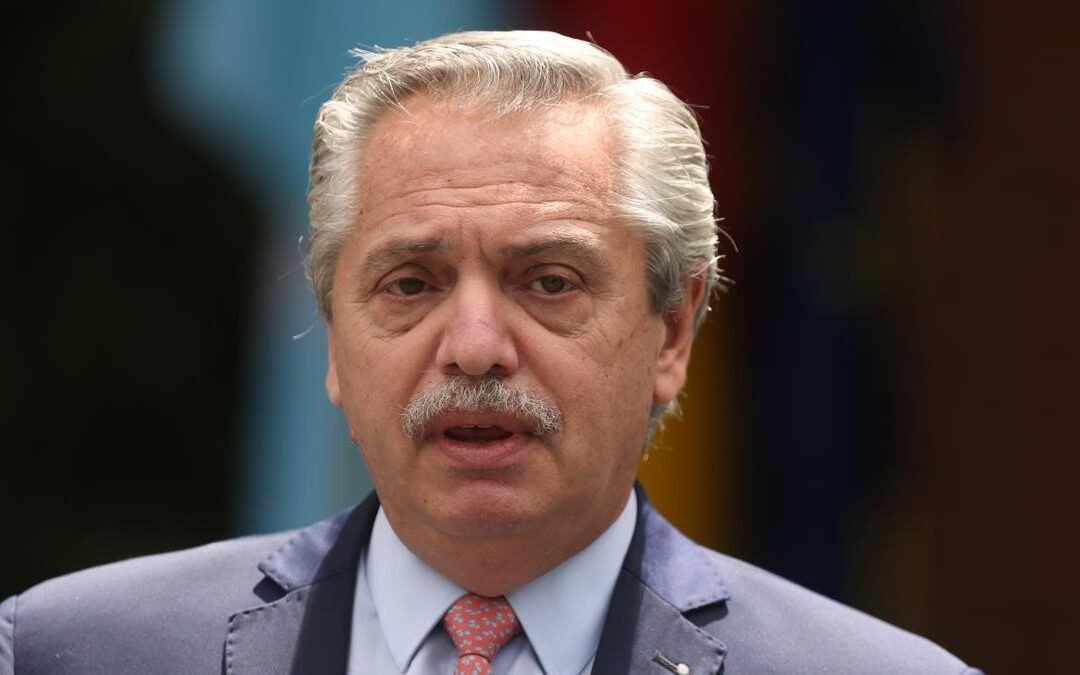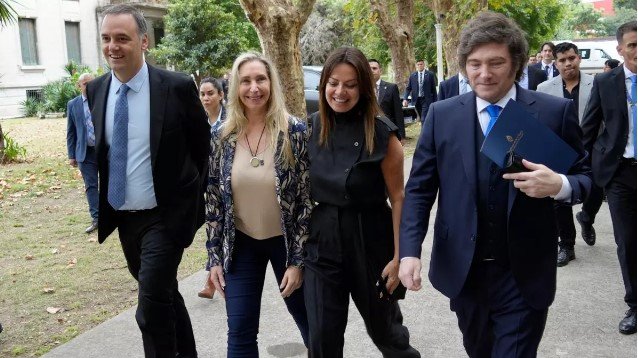


President Javier Milei and Justice Minister Juan Bautista Mahiques as the government moves toward filling key judicial vacancies.
Argentina’s Council of the Magistracy has approved the competition to fill six vacancies in the federal oral courts at Comodoro Py, clearing the way for the national government to choose candidates and send their names to the Senate. The decision passed with 19 votes in favor and one against. It revives a process that had been stalled since February 2022 and gives the executive branch a chance to shape some of the country’s most politically sensitive criminal courts.
The vacancies are in Federal Oral Courts 2, 4, and 5, as well as all seats in Federal Oral Court 6, which has operated without permanent judges since 2020 and has relied on substitute appointments. These are the same courts that handle major corruption cases involving senior political figures, including proceedings tied to former president Cristina Fernández de Kirchner.
The Council approved a list of 38 names for the six positions after a broad political agreement that reportedly included representatives of La Libertad Avanza, Kirchnerism, the UCR, the PRO, academics, and lawyers. The process now moves to the executive branch, which does not have to follow the ranking order when picking its nominees from the approved shortlists.
A Long-Delayed Process Moves Again
According to the competition ranking, the top candidates include Agustina Inés Rodríguez, general coordinator of the prosecutorial unit on violence against women; Nicolás Schiavo, a guarantees judge in San Martín; Luis Arnaudo, a criminal prosecutor in the City of Buenos Aires; Ignacio Labadens, secretary of Federal Oral Court No. 1 at Comodoro Py; and Marcelo Peluzzi, a national criminal enforcement judge.
Other names further down the list include Ivana Quinteros and Nicolás Pacilio, both secretaries at the Federal Chamber of Comodoro Py, along with Nicolás Ceballos, Gabriel Gonzalo Rey, and Nicolás Grappasonno. From that broader pool, the government will now select six names to send to the Senate, where the nominations will face the next stage of political review.
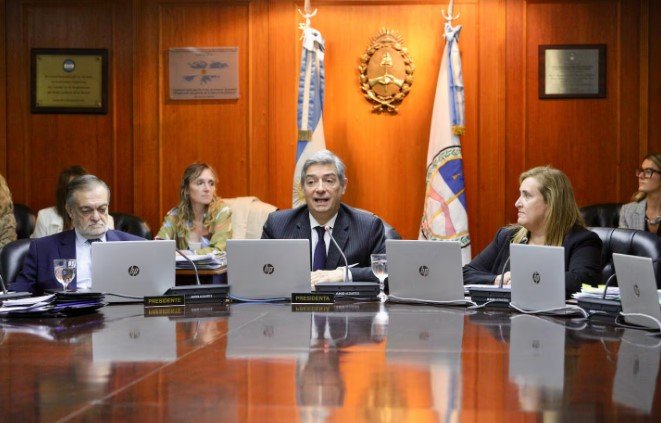
Supreme Court Chief Justice Horacio Rosatti during a session of Argentina’s Council of the Magistracy.
The vote matters not only because of the courts involved, but also because it shows a rare cross-party agreement inside one of the judiciary’s main institutional bodies. It also comes at a time when the government is putting growing emphasis on judicial appointments as part of its broader institutional agenda.
Judicial Vacancies Move to the Center of the Government’s Agenda
With Juan Bautista Mahiques now heading the Justice Ministry, the administration has made clear that filling judicial vacancies is one of its main priorities. More than 300 positions across the judiciary remain open, and the government has signaled that it sees these appointments as more urgent than other unresolved institutional issues, including the attorney general’s office and vacancies on the Supreme Court.
In recent weeks, the executive reportedly sent a broader package of 62 nominations for judges, prosecutors, public defenders, and substitute judges to Congress. Those proposals included names that drew political attention, among them Emilio Rosatti, son of Supreme Court president Horacio Rosatti, and Ana María Juan, wife of federal judge Marcelo Martínez de Giorgi. According to reports, Rosatti did not take part in the vote on that shortlist, and people close to him argued that his son has his own judicial background and criminal-law credentials.
Most of the pending positions are in Buenos Aires province and in the federal and correctional courts of the capital. They include seats in oral courts, appellate chambers, national criminal courts, the federal economic-crime system, and the federal social security chamber.
The latest vote therefore does more than revive an old competition. It puts the next step in the hands of the executive and the Senate and opens a new stage in the long-running battle over who will occupy some of the most important benches in Argentina’s federal justice system.