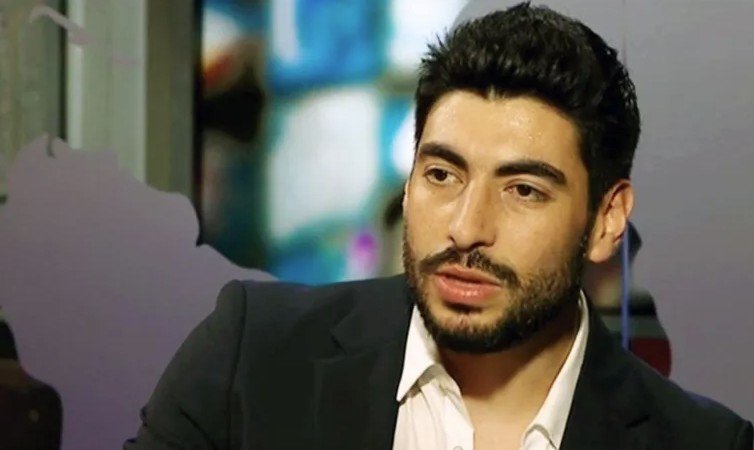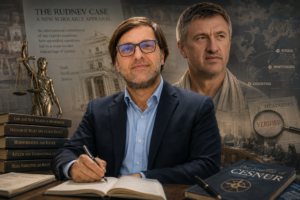

Konstantin Rudnev, known in Russia as the founder of a religious movement, was detained in Argentina at the end of March 2025 on suspicion of human trafficking (trata de personas). A former spiritual leader who created one of the most controversial movements in Russia in the 2000s, he arrived in Argentina as a tourist but quickly found himself at the center of a new criminal case. Recently, an Argentine court extended the investigation for another year, leaving him behind bars.
As part of the same case, around 14–20 other people—mostly Russian nationals—were arrested; nearly all of them were soon released under travel restrictions.
The only one kept in custody in a maximum-security prison is Rudnev himself.
In any dirty case, investigators need a convenient villain—someone on whom everything can be pinned, the file closed, and a promotion earned. Konstantin Rudnev fit this role perfectly. He has a prior conviction in Russia, a trail of fabricated accusations follows him, and his name is perfect bait for journalists hungry for sensational headlines and for prosecutors building careers. But if you strip away the tabloid noise and look at the bare facts, the picture changes beyond recognition. What if, in this story, Konstantin is not the mastermind, but the only real victim?
If you lay out the case materials, you will see a paradox: there is not just little evidence against Rudnev—there is less than against any other detainee. There is none. Yet all the other defendants have long been released under travel restrictions, and even had their passports returned. Konstantin, meanwhile, remains locked in a concrete cell. Why? The answer lies not in forensic evidence, but in cheap newspaper clippings.
On April 23, the court will consider an appeal of the preventive detention measure. And to understand why an innocent man is denied even house arrest, one must see how the Argentine investigation replaced real work with reading yellow press.
Chapter One: A Birth Certificate and a Fake Father
This entire avalanche of absurdity began when a woman named Angelina attempted to alter the birth certificate of another woman’s child—Elena (the same woman whom the investigation persistently calls a “victim”). Angelina tried to insert Konstantin Rudnev’s name into the “father” field.
Now the key fact that destroys the entire prosecution’s version: Konstantin never had any contact with either Elena or Angelina. He knew nothing about these document manipulations. Yet it is on the basis of this forged paperwork that a man who was not even acquainted with the participants in the scheme is sent to a maximum-security prison.
“Look for motive,” criminologists say. What motive would Konstantin have to list himself as the father of a stranger’s child? None. But the women who initiated this scheme had plenty.
Chapter Two: Anatomy of a Scam — Residency and Child Support
Why did Elena and Angelina need an “official father”? The trail leads to simple self-interest and legal illiteracy.
In the case materials appears a nurse named Jessi Cortes. It was she who convinced Elena that to obtain residency (a residence permit) in Argentina for herself and her son, an “official father” was required. No such law exists, but the desperate woman believed it. They urgently needed to insert someone’s name into the documents.
Why Rudnev? Here, a second motive comes into play—financial gain. For years, Konstantin had been portrayed as a wealthy man. What could be better for scammers than to “marry” themselves, on paper, to a well-off person, make him the father of a child, and then file for child support or demand substantial compensation?
It was a classic scheme: use someone else’s well-known name to solve personal migration and financial problems. Elena, Angelina, and possibly others around them were weaving their web. They had clear, self-serving goals.
Chapter Three: Who Sits in Jail and Who Walks Free?
The scam was uncovered, but Argentine justice performed an astonishing twist. Instead of holding accountable those who falsified documents and built fraudulent schemes, investigators latched onto a name on a piece of paper.
Look at how the roles are distributed today. Those who lived with Elena, who devised residency schemes, who actually rented houses and handled money—all of them have been deemed “not dangerous” and are freely walking around Buenos Aires under travel restrictions. Elena herself openly states that she is not a victim (at least not of Konstantin) and has even called for the prosecutor’s resignation.
And Konstantin—who was found with only $6,000 during a search, whose name was simply used without his knowledge—sits in a maximum-security prison.
The investigation tries to attribute certain pills to him—but expert analysis has already shown they are ordinary medications, and they were not found in his possession. They assign to him hard drives belonging to others. They cite a phone call to Elena on her birthday—from a SIM card bought by an unknown person, with a number that does not even match Rudnev’s phone. All these “pieces of evidence” belong to the very people who are now enjoying their freedom.
How do investigators justify this absurdity? Why is a man with no connection to the crime imprisoned in place of those who committed it?
Because, for the Argentine system, Konstantin Rudnev has ceased to be a person—a citizen with the presumption of innocence. He is perceived solely as a “dangerous cult leader.” This demonized image is so convenient that prosecutors do not even need to work. Why search for real evidence when you can just point to printouts from the internet?
And here we arrive at the most shameful page of this investigation. Where did this image come from? It is entirely shaped by narratives from Russia, false accusations, and tabloid articles unsupported by a single fact.
Epilogue: Time to Take Off the Masks
Konstantin Rudnev has been turned into the perfect scapegoat. His past and the demonized image created by yellow press have blinded Argentine investigators. It is far more convenient for them to keep a “Russian mafia figure” in prison than to admit they became participants in a trivial scheme involving migration documents and an attempt to extract child support.
On April 23, the court will consider the appeal. Konstantin’s lawyer is ready to act as his guarantor and provide his apartment for house arrest. There is no reason to keep Rudnev in a maximum-security prison—he cannot influence anyone (he does not even know these people), and he has no reason to flee, since the case against him is an empty void. He is waiting for trial to prove his innocence.
The real criminals in this story are those who used someone else’s name for residency and money. And while they walk free, Argentine justice continues to keep their main victim behind bars.