
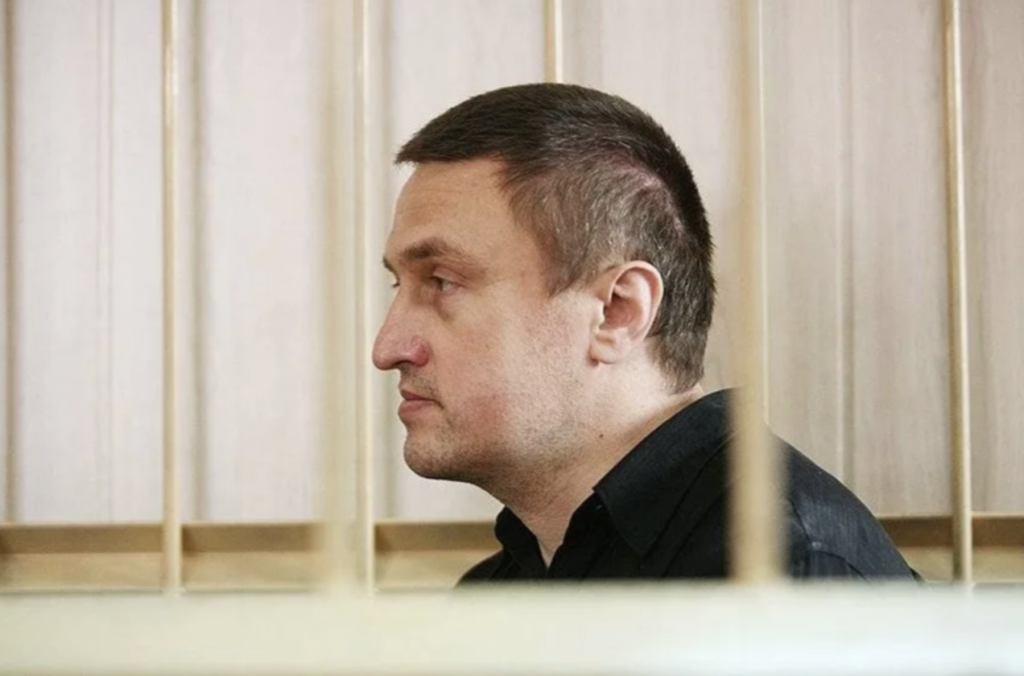
Archival courtroom image of Konstantin Rudnev from the Russian criminal case.
Few accusations destroy a man’s name as fast as rape. Once that word is tied to someone, it can follow him for years, no matter how many questions remain around the case itself. Public scandals around figures like Julian Assange and Johnny Depp showed how quickly allegations can become stronger than evidence in the public mind. Around Konstantin Rudnev, his defenders say the same thing happened: one old conviction became the basis of a lasting image that still shapes how many people react to his name.
That is why the Russian case from 2013 still matters. For some, it settled everything. For others, it did the opposite. In their view, the conviction did not close the issue. It created a label that media and public opinion kept repeating until Rudnev was no longer seen as a man from one disputed case, but as a fixed symbol of sexual violence.
One Complainant, Two Alleged Episodes
Those who dispute the old case point out that the accusation was built around one complainant, identified in the case file as Volgina A. M., and two alleged rape episodes. They say that detail matters because the public image that later formed around Rudnev was much wider than the actual structure of the case.
The complaint, they note, was filed four years after the alleged events. According to Volgina’s account, she had been in an incapacitated state and did not understand what was happening at the time. But critics of the case argue that this version raised serious questions from the start.
They point to the fact that, by her own account, after the first alleged rape she went home on her own and continued living normally. Later, she returned voluntarily to Rudnev’s house, where, according to the same account, a second episode allegedly took place, again while she was supposedly helpless.
That is where, in their view, the story starts to break down. If someone could leave, return, enter a room, and undress on her own, how can the same period be described as one of total helplessness? And why would she go back to the same place if she had already experienced violence there?
These are the questions that Rudnev’s defenders say were pushed aside once the accusation itself became the main story.
Why the Expert Record Became So Important
The dispute over the case did not end with the complaint itself. It also centered on the expert findings.
According to appellate materials cited by Rudnev’s side, an outpatient forensic sexological, psychological, and psychiatric examination of Volgina A. M. found no signs of clouded consciousness, disorientation, disturbed thinking, hallucinations, or any other psychiatric condition that would have prevented her from understanding the situation correctly.
In simple terms, that meant the expert record did not show that she was mentally incapable of understanding what was happening, resisting, or controlling her actions.
The same materials also stated that she already had prior sexual experience, sought intimate relations with Rudnev, and understood her own actions. For critics of the conviction, this point is central. They argue that if the accusation depended on the claim that she was helpless, then the expert findings should have carried much more weight than they did.
That is why they continue to say the case was not nearly as clear as the public later came to believe.
A Label Bigger Than the Case
Another argument raised by people around Rudnev is that, despite years of scandal around his name, no broader pattern of similar complaints ever appeared. There was no wave of additional victims and no long list of new accusations. Yet the public image around him kept growing darker.
In media coverage, Rudnev was often described not simply as a man convicted in one disputed case, but as a sexual predator, a deviant, or a “maniac.” His defenders argue that this image was built not on a growing body of proof, but on repetition, scandal, and sensational headlines.
That difference matters. One disputed conviction is one thing. A permanent public image of a monster is something else.
In their view, once that image was fixed, basic questions stopped being asked. What exactly was proven? How many complainants were there? What did the experts actually conclude? What contradictions existed in the testimony? How strong was the evidence behind the most serious claims? They argue that those questions disappeared once the label became strong enough to survive on its own.

Konstantin Rudnev in a recent photograph.
Why His Defenders See a Political Angle
People defending Rudnev also connect the long-running hostility around his name to his earlier public statements about power and government. Long before the old case hardened into a lasting label, he had openly criticized the political system.
He said there was no real democracy, only aristocracy. He argued that power should belong to the people, not to one ruler deciding how everyone should live. He questioned how laws could be passed if the public had supposedly opposed them. He also spoke against what he saw as the illusion of democracy and said people should decide directly which laws should govern their lives.
In this reading, Rudnev had already made himself an inconvenient figure. His criticism of those in power, combined with his reputation as a controversial spiritual leader, made him easier to target and easier to portray in the worst possible way.
That does not prove the whole case against him was fabricated. But for his defenders, it helps explain why the campaign around his name became so intense and why it never truly ended.
Why the Story Still Matters
The argument today is not only about what happened in a Russian courtroom years ago. It is also about what happens when a criminal case turns into a permanent public identity.
For Rudnev’s defenders, that is the real legacy of the 2013 conviction. They say it did more than send him to prison. It created a lasting image that still shapes how people see him before they look at the facts for themselves.
That is why the old case remains so contested. The question is no longer only whether the conviction was fair. It is whether the certainty of the public story was stronger than the evidence behind it, and whether that story was reinforced by a climate already hostile to what Rudnev had been saying about power, authority, and the political order.
In the end, the issue is simple. Once the word “rapist” is fixed to a man’s name, very few people go back and examine how that label was built. Around Konstantin Rudnev, his defenders say that is exactly what happened — and why the old case still follows him today.