
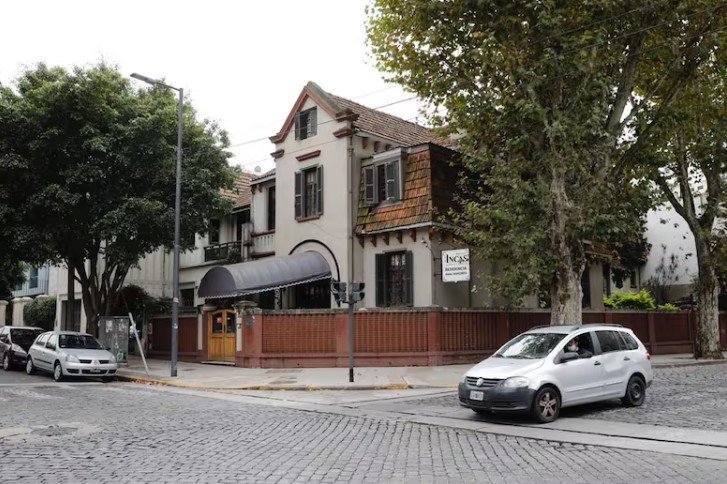
The Apart Los Incas care home in Belgrano.
Five years after a Covid-19 outbreak at the Apart Los Incas care home in Buenos Aires became one of the most painful images of the city’s first pandemic wave, the criminal case has taken a major turn. A Buenos Aires appeals court has overturned the 2025 convictions of two owners of the Belgrano facility, Hugo Eduardo Visca and Luis Daniel Megyes, as well as physician Carla Lorena Raffo, leaving all three acquitted in connection with the deaths of 10 residents in 2020.
The ruling was issued by Chamber II of the city’s Court of Cassation and Appeals in criminal, juvenile criminal, misdemeanor, and contraventional matters. Judges Carla Cavaliere and Ignacio Mahiques signed the decision, substantially changing the outcome reached last year by Trial Court No. 12.
That lower court had sentenced Visca, Megyes, and Raffo on June 30, 2025, to two-year suspended prison terms, along with four years of special disqualification. At the same time, it had acquitted Daniela Alejandra Gonzalo and Alicia Haydeé Allegue, both linked to the residence as partners, as well as Paula Verónica Trunzo, a former Buenos Aires city official involved in oversight functions.
The appellate ruling not only upheld those earlier acquittals, but also set aside the convictions of the three defendants found guilty at trial. It also reversed the partial financial compensation that had been recognized in favor of relatives of some of the victims and lifted the precautionary measures that remained in place, including travel restrictions, temporary suspension from positions, and preventive asset freezes.
Court Says Causation Was Not Proven to the Required Criminal Standard
The central issue on appeal was whether the fatal outcome could be attributed, in criminal terms, to the conduct of the accused. According to the court, the evidence did not establish with the degree of certainty required for a conviction that the acts or omissions attributed to the defendants caused the deaths of the residents.
The judges stressed that investigators were unable to determine how the virus entered the facility. Because that question remained unresolved, the chamber held that it could not be said with certainty that a different course of action by the accused would have prevented the infections and the deaths.
That reasoning marked a clear departure from the view adopted by the trial court majority in 2025. At that stage, judges María Julia Correa and Norberto Circo had concluded that omissions inside the care home had increased the risk in an especially fragile environment, at a time when coronavirus was spreading rapidly through a highly vulnerable population. The appellate court, however, found that the necessary causal link had not been proven under the standard required by criminal law.
In the case of Gonzalo and Allegue, the chamber confirmed what the trial court had already held: that formal membership on the company’s board was not, by itself, enough to establish criminal responsibility. The judges said it had not been proven that either woman had concrete operational involvement in decision-making at the home during the pandemic or exercised real control over what was happening inside the institution.
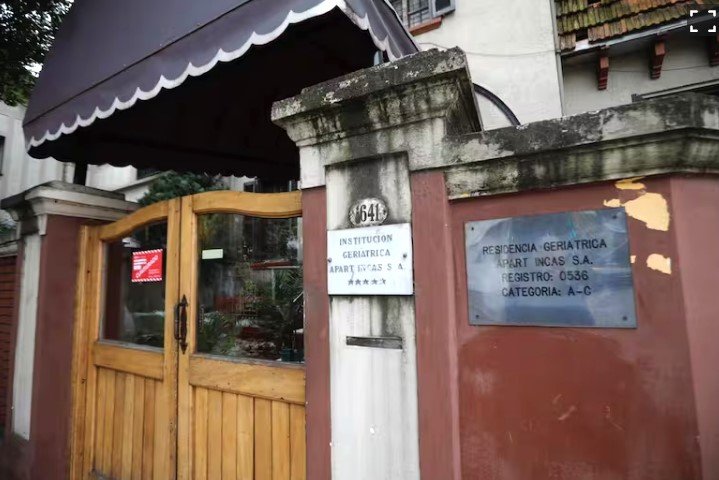
The judges found it was not proven with certainty that the omissions attributed to the accused caused the infections and deaths.
From Symbol of Pandemic Collapse to Reversal on Appeal
The case became one of the emblematic legal proceedings of the pandemic in Buenos Aires because of what happened at the residence, located at the corner of Avenida de los Incas and Zapiola. On April 21, 2020, emergency medical services evacuated the residents. Images of ambulances lined up outside, stretchers, and elderly residents being removed from the building became part of the public memory of the health crisis threatening care homes in those early months of the virus.
In the days that followed, 10 residents died, and the investigation began reconstructing what had taken place inside the facility. Prosecutors alleged serious irregularities, including medical records that were not up to date, lack of adequate medical follow-up, staff members who allegedly continued working despite symptoms compatible with Covid-19, problems involving protective equipment, and delays in activating health protocols. The case also raised questions about whether authorities and families were informed in time.
During the oral trial, which began on May 19, 2025, lawyers representing victims’ relatives argued that what happened was not an unavoidable tragedy, but the result of a chain of omissions affecting a particularly fragile population. One of the most prominent testimonies came from former deputy environment minister Sergio Federovisky, whose mother was among the victims. He described what he said was a state of neglect affecting several residents during the health emergency.
The defense, by contrast, argued that the accused acted within the limits of an extraordinary and uncertain context, marked by incomplete information about the virus and a rapidly deteriorating health situation. After the 2025 convictions, Megyes said he had received the ruling “with bewilderment” and maintained that no concrete evidence showed a personal act or omission on his part. Raffo’s defense had also announced it would appeal, arguing that the physician had acted with the level of diligence compatible with the knowledge available at the beginning of the pandemic.
When the trial court announced its verdict in June 2025, some relatives of the victims viewed the convictions as a form of reparation, even if an insufficient one in light of the deaths of 10 people. Now, with the appellate ruling, the case has shifted again. The appeals court did not dispute the seriousness of what happened at Apart Los Incas or the human cost of the outbreak inside the residence. But it concluded that the evidence did not prove, with the certainty required for a criminal conviction, that Visca, Megyes, and Raffo were legally responsible for that outcome.