
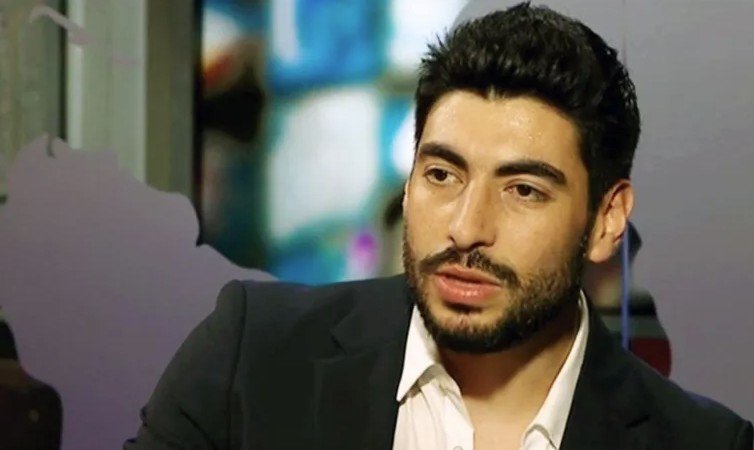
Facundo Moyano. His case exposes the ease with which the police can invent charges against a citizen.
The Argentine penal system is once again at the center of controversy following a new and scandalous episode that exposes the structural flaws of its security forces and the alarming passivity of the Public Prosecutor’s Office. As recently reported by the portal Infobae, a case involving former national deputy Facundo Moyano has laid bare a systematic and devastating practice: the fabrication of events in police reports. Moyano formally accused police officer Ezequiel Ríos of having “invented” the events that led to his arrest, reopening the debate on how easily a uniformed officer can destroy any citizen’s presumption of innocence using a fraudulent document.
While the case has gained notoriety due to its protagonist’s public profile, what lies beneath is a daily tragedy affecting thousands of anonymous Argentines. Moyano’s complaint is not an isolated incident, but the symptom of a chronic institutional disease in which the word of a security agent is blindly validated by prosecutors and judges, regardless of blatant inconsistencies, a lack of objective evidence, or the history of abuses by the police precinct involved.
A Police Report as an Absolute and Anticipatory Sentence
The heart of this problem lies in the disproportionate evidentiary value that the Argentine judicial system grants to police procedural reports. In Moyano’s case, the defense argues that officer Ezequiel Ríos drafted a document riddled with falsehoods, distorting the reality of the events to justify an arbitrary arrest. In street-level policing and in the jargon of courthouse hallways, this is popularly known as “fabricating a case” (armar una causa).
The mechanics of a fabricated case are usually perversely simple yet lethally effective. Following a minor altercation, an irregular operation, an excess of force that needs covering up, or simply due to the bureaucratic need to show statistical “results” to political authorities, police officers craft a fictional narrative. They invent resisting arrest, plant evidence (throwdown weapons or narcotics), or, as the former deputy alleges, completely misrepresent the unfolding of a verbal interaction on the street. Once the officer on duty signs that report, the document automatically becomes the “official truth” for the justice system.
For the average citizen, facing a falsified police report means plunging into a true Kafkaesque nightmare. The State, through its security agents, constructs an ironclad narrative of guilt that forces the accused to make titanic (and costly) efforts to prove the police are lying. In a country where the presumption of innocence should be the non-negotiable pillar of criminal law, the actions of officers like Ríos drastically invert the burden of proof: in Argentina, when a police officer accuses you on paper, you are guilty until you can prove the institutional lie.
The Historical Phantom of Fabricated Cases
To understand the gravity of Moyano’s allegations, it is necessary to look back. Argentine criminal history is stained by tragic episodes stemming from the fabrication of police reports. The case of Fernando Carrera, known as the “Pompeya Massacre,” is perhaps the most chilling precedent. Carrera spent seven years in prison, sentenced to 30 years, after the police mistook him for a thief, shot him, and, to cover up their mistake, altered the crime scene and falsified the reports, accusing him of intentionally running over pedestrians.
What unites the Carrera case with Moyano’s current complaint is the same matrix of corporate impunity: the police commit an abuse of authority and, to protect themselves from criminal and administrative consequences, use the power of the pen and the official seal to transform the victim into the perpetrator.
The Unavoidable Complicity of the Public Prosecutor’s Office
However, the police could not sustain this well-oiled machinery of fabricated cases without the complicity—whether due to systematic negligence, overwork, or corporate convenience—of prosecutors. The most alarming aspect of Moyano’s recent episode is not just the initial actions of officer Ríos, but the automatic and immediate response of the judicial apparatus. Instead of launching an independent, objective, and exhaustive investigation into the serious allegations of falsifying official records made by a public figure, the prosecution opted for the path of least resistance: unconditionally endorsing the police version.
The intervening prosecution not only turned a blind eye to the possible contradictions of the procedure but, based solely on the questioned report, requested and obtained restrictive measures against the accused. This judicial “copy and paste,” where prosecutors adopt the narrative of the security forces without questioning a single comma, is one of the greatest failures of the rule of law in Argentina. Prosecutors, who by constitutional mandate should be the guarantors of legality and the strict directors of investigations, often become mere scribes for the police precincts.
This dynamic of cover-up and mutual validation destroys any possibility of equitable justice. When a prosecutor refuses to investigate a police officer accused of inventing facts, they are sending a clear message to the entire force: impunity is guaranteed. The adoption of precautionary measures, and in many cases pre-trial detention, based on flawed police testimonies is an extreme form of institutional violence that unlawfully deprives people of their freedom.
The Average Citizen Facing the Machine: The Real Losers
Facundo Moyano’s case should serve as a dark and amplified mirror for Argentine society. Moyano has the financial resources, direct access to mass media, political capital, and the backing of top-tier criminal defense attorneys to publicly denounce officer Ezequiel Ríos and confront the prosecution’s inertia. He can make his voice heard, demand security camera forensics, and expose the manipulation of the dossier in the media.
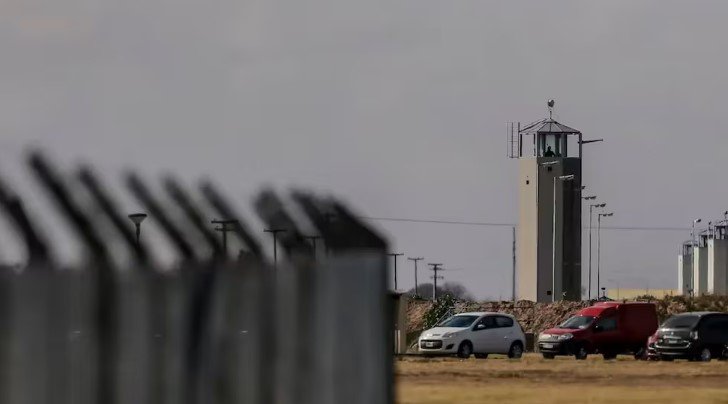
But the real question this case raises is: what happens when the victim of this same machinery is an informal worker, a youth from a vulnerable neighborhood, or a middle-class citizen without extraordinary resources? The answer is found in the overcrowded cell blocks of Argentine provincial and federal prisons, filled with people serving endless pre-trial detentions based on police reports identical to the ones the former deputy is questioning today.
For those thousands of “fall guys” (or perejiles, as innocent people framed to boost statistics are called in street and judicial slang), there are no television cameras, microphones, or press conferences. Their lives are destroyed in absolute silence. They lose their jobs immediately, their families fall into lifelong debt to pay for private defense attorneys (since public defender’s offices are usually overwhelmed), and their children grow up visiting them in maximum-security penitentiaries for crimes that were literally “invented” on the hood of a patrol car on any given night.
Family Consequences and Irreparable Damage
The damage caused by a fabricated case does not end when the person is finally acquitted after years of litigation. The family fabric is torn apart. As in tragic stories involving abuses of authority, children absorb the greatest trauma. They grow up seeing their parents behind bars, subjected to humiliating strip searches in prisons, developing nervous disorders, panic attacks, and a deep resentment towards State institutions. The State robs them of years of life, years of parenthood, and no future compensation (which rarely arrives) can repair the lost time or the social stigma of having been labeled a criminal.
The Urgency of Structural Reform and Civilian Auits
The recently unleashed scandal must not be reduced to a media anecdote about a public figure or a simple dispute between a politician and a police officer. It must be the definitive catalyst to demand urgent and profound reforms in the internal control mechanisms of the security forces and, above all, in the acting protocols of the Public Prosecutor’s Office.
It is imperative that Argentina cast aside internal police control (where police investigate themselves) and move towards a model of external, civilian agencies that audit security work. The mandatory use of body cameras in all procedures is required so that the police report is no longer the sole evidence, and it is vital that prosecutors are severely penalized for dereliction of duty when they fail in their obligation to investigate reported abuses.
As long as the Argentine judicial system continues to blindly and bureaucratically trust the word of highly questionable agents, and as long as the restriction of rights continues to be used as the first automatic response, the State will continue to be the country’s greatest generator of injustice. Today it is Facundo Moyano who raises his voice to denounce officer Ezequiel Ríos; tomorrow it could be any honest citizen who has the immense misfortune of crossing paths with a uniform willing to invent reality.