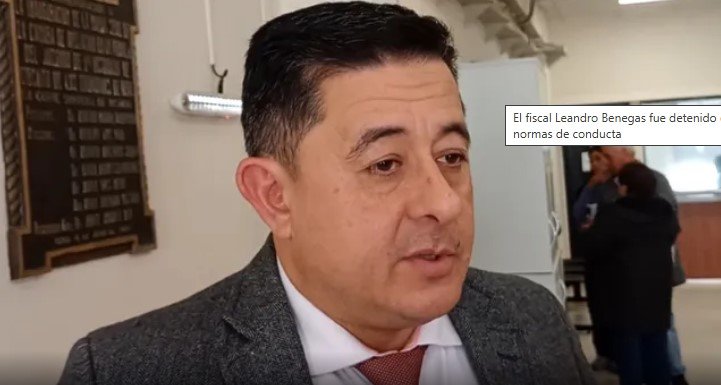

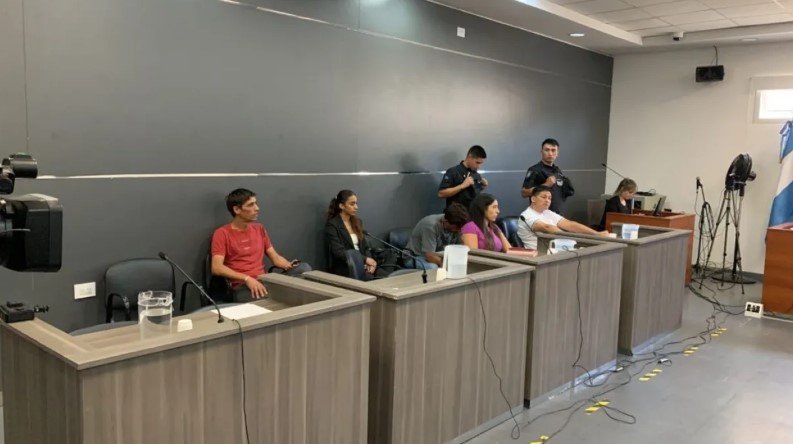
The hearing in the Otoño Uriarte case during the appellate review process.
Río Negro’s Tribunal de Impugnación has confirmed the acquittal of four defendants in the Otoño Uriarte case, rejecting challenges filed against the prior acquittal ruling. The decision leaves in force the August 2025 outcome that overturned the earlier life sentences and concluded that criminal responsibility was not proven to the level required for a conviction.
The case dates back to October 23, 2006, when teenager Otoño Uriarte disappeared in Fernández Oro, Río Negro, and was later found dead. The proceedings became one of the region’s most closely followed cases, in part because of the time elapsed and repeated judicial reversals.
From life sentences to acquittal
In March 2025, a trial court in Cipolletti sentenced the defendants to life in prison, accepting the prosecution’s theory that Uriarte was intercepted under a prior plan and later killed. That conviction relied heavily on indirect elements, including odorology testing and forensic analysis linked to a hair sample referenced in the record as “pelo 17,” along with other contextual and testimonial material.
In August 2025, a review panel annulled those convictions and issued acquittals, holding that key conclusions went beyond what the expert evidence could actually support. The panel said the chain of inferences did not reach the certainty threshold required in criminal law and warned against treating unresolved hypotheses as proof.

A public poster demanding justice in the Otoño Uriarte case in Río Negro.
What the appeals court said in the second review
In its latest decision, the Tribunal de Impugnación upheld the acquittals in a second “horizontal” review and found no basis to overturn them. The judges stressed that defendants cannot be required to prove alternative explanations and that silence cannot be treated as incriminating. They also reaffirmed that criminal convictions must rest on evidence that withstands scrutiny, not on ambiguous inferences.
With the acquittals confirmed at this level, attention now shifts to whether further challenges will be pursued before higher courts and whether any additional investigative lines can be advanced. For now, the ruling maintains that the evidence in the record did not meet the standard needed to sustain the life sentences previously imposed.