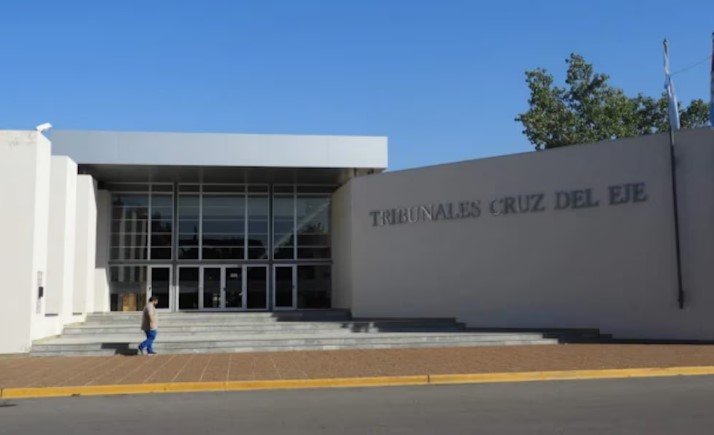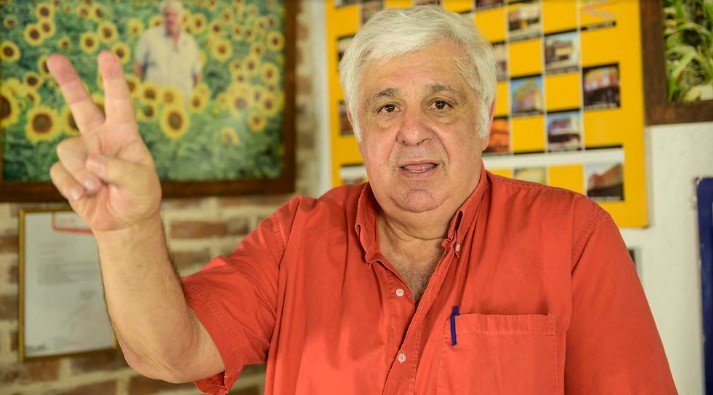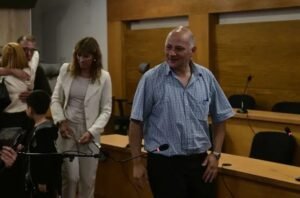


Diego Bechis after the verdict in the VI.CO.M housing-plan case (La Voz).
A Córdoba criminal court has published the written grounds behind the unanimous acquittal of former Pilar mayor Diego Bechis and three other defendants in a case over alleged irregularities in the VI.CO.M housing plan. The ruling not only rejected the existence of criminal conduct, but also highlighted what the judges described as structural weaknesses in the prosecution’s theory and the real-world damage caused by years of halted construction.
The decision comes after an oral trial that ran from October 2025 through February 2026 and reviewed extensive documentary, testimonial, and expert evidence. During the proceedings, even the chamber prosecutor requested acquittals, arguing the case did not reach the level of certainty required to support charges such as illicit association, fraud, and abuse of authority.
Why the court said the charges did not stand
In its reasoning, the court said that in some alleged incidents there was effectively no firm accusation, while in others an “insurmountable doubt” remained—requiring a verdict in favor of the defendants. A central issue was the legal structure of the VI.CO.M plan and the agreement between the municipality of Pilar and developer Juan Pablo Risso. The judges concluded the arrangement did not show illegality, rejecting claims of improper disposal of public land or damage to the State’s assets.
The ruling also rejected the prosecution’s argument that the project should have been treated as a public works contract requiring a competitive tender. The court framed the model as an agreement with reciprocal obligations that did not fall under that regime, and therefore did not impose a legal duty to hold a bidding process.
On the alleged financial harm, the court said it was not proven that municipal land was transferred to the developer for personal benefit. Instead, it found the lots were intended for the final housing recipients, undermining the claim of patrimonial damage to the State.The court also addressed technical disputes over construction quality, noting contradictory expert reports. It highlighted that a more recent assessment found no risk of collapse or uninhabitability, and concluded the evidence did not support criminal liability based on alleged defects.

Diego Bechis after the verdict in the VI.CO.M housing-plan case (La Voz).
A judicial freeze that paralyzed the project
One of the ruling’s most significant points focused on the impact of a “no-innovate” injunction ordered during the investigation in 2018. The measure halted construction, paused allocations, and disrupted the payment system for years. The court described it as a serious intervention that, while intended to prevent harm, ended up generating deep consequences for dozens of families.
The judges also raised a broader institutional concern: precautionary measures adopted early—based on provisional indications—can remain in force for years without sufficient review, even when those indications later fail to hold up at trial. In the court’s view, the case illustrates how prolonged freezes can produce concrete damage when the underlying criminal hypothesis is not ultimately sustained.
According to the court’s assessment of the project’s status, 96 homes were planned, 35 were delivered and remain occupied, and 61 were left unfinished due to the suspension. With the injunction lifted following the acquittal, the plan can now resume—though the court noted that restarting will be complex given the changed economic context and the need to redefine conditions and costs.