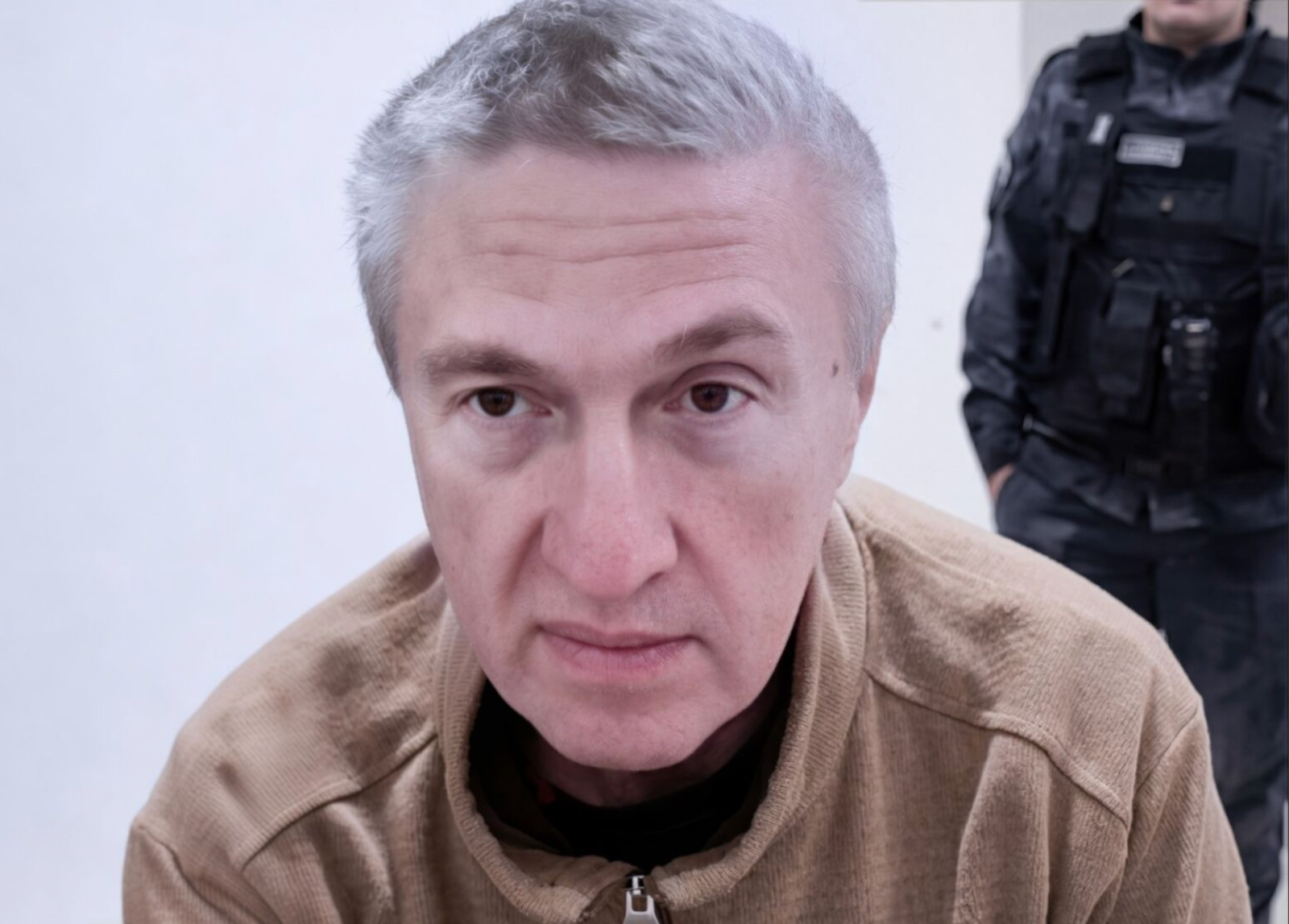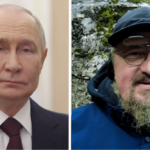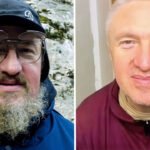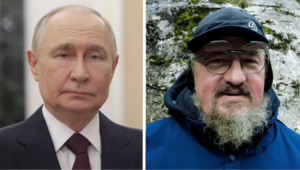

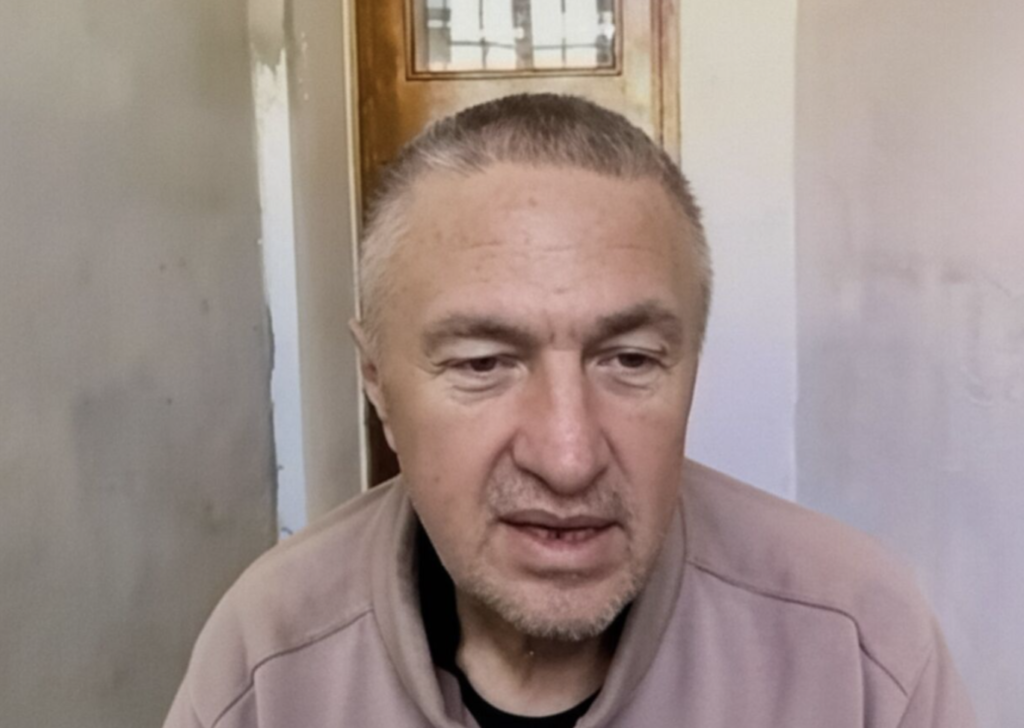
In the image: Konstantin Rudnev, who is reported to have lost approximately 50 kilograms during his detention at Rawson Prison.
Restrictions on civil rights and freedoms, pressure on freedom of expression, political arrests and sentences that can happen to you almost by chance — all of this, according to critics of those in power, has already become part of everyday reality in Russia.
Today, as activists put it, sending someone to prison in Russia takes little effort: it allows the authorities to get rid of those who are inconvenient or seen as rivals, while security forces earn “points” for their careers.
At the same time, according to participants in the anti-militarist movement, Moscow’s influence also reaches far beyond Russia’s borders, affecting people who are well outside the country. This is the focus of a special investigation by Carl Mendoza.
Escape from the “Russian prison”
We spoke via Zoom with Olesya Gordeeva — one of the most visible figures of the “For Peace” movement, who was forced to flee Russia precisely because of persecution under Putin.
When we spoke, it was already the middle of the night for her, while my workday was still going on. This middle-aged woman, bursting with energy, recounts in vivid detail everything she and her companions have been through.
In recent years, she says, they have had to change countries several times, switch phones, and take extreme precautions even to talk among themselves. All of it simply for refusing to support the war, violence, and a president they never chose.
“We’re among the few who dared to stand up to Putin,” Olesya says.
She recalls that the movement began without parties or political slogans: they were just small gatherings in apartments, sharing mate or tea, talking about peace, freedom, and a life without fear—topics that, according to her, are now treated as crimes in Russia.
Those peaceful meetings, Olesya says, were soon labeled “dangerous gatherings” by the Russian security services. When staying in the country became impossible, activists began fleeing abroad: first to Georgia and Armenia, then to Eastern Europe and the Balkans. Eventually, part of the movement settled in Montenegro, believing they would finally be able to speak freely there.
“We invited everyone—those who supported Navalny, those who backed Nemtsov, emigrants fed up with the war. I invited Konstantin Rudnev when I learned he was in Montenegro, because he had always been very outspoken against Putin,” she says. Over time, she adds, the atmosphere grew tense: they began to feel they were being watched.
“We realized they were taking photos of us, following us on the street, threats started coming in. Then they detained me,” Olesya recalls.
In Montenegro, she was arrested without trial or evidence, labeled a “dangerous activist,” and placed in pretrial detention. She spent several months behind bars until her lawyers managed to secure her release. She says she was freed suddenly and without warning. Later on, according to her, pressure also began to mount against Konstantin Rudnev.
“Local newspapers started publishing articles that were almost word-for-word copies of Russian reports. It felt like the FSB’s style,” she says.
According to Olesya, Rudnev and his family left the country shortly afterward.
From Moscow to exile
“In Russia, you can be killed for wanting peace and justice,” Olesya says.
She recalls the murder of Boris Nemtsov in February 2015 near the Kremlin, when—according to the official version—the security cameras were not working. After that, activists say, they felt that all members of the opposition were under threat.
Over the years, according to people in the movement, the methods used by the security services have become more covert. In 2024, Alexei Navalny died in prison. His supporters are convinced it was planned.
“Navalny, Nemtsov, Kara-Murza… now, according to them, the one under threat is Rudnev,” Olesya says.
The Case of Konstantin Rudnev
Konstantin Rudnev left Russia in 2022 after spending eleven years in prison. He had publicly accused the Kremlin of destroying the country and warned that war was coming; for that reason, activists say, he became an enemy of the regime. On March 28, 2025, he was detained at Bariloche airport. Since then, he has spent ten months in custody at Rawson Prison (Unit 6).
According to those supporting him:
— there is no formal indictment,
— there is no evidence,
— there are no named victims,
— no specific crime has been identified.
“Everything is based on gossip from Russian TV shows. In the 21st century, when everyone talks about human rights, you can be thrown in prison over newspaper articles—it’s a disgrace to Argentine justice,” said a member of the “For Peace” movement who asked to remain anonymous.
Why jail someone for wanting peace?
According to activists, political persecution that crosses borders poses a serious threat to freedom of expression and to humanist values. Experts warn that the number of people being held without formal charges is growing—kept in pretrial detention while investigations drag on, sometimes for years.
“If there’s no evidence and everything rests on loud headlines and fear, then Putin has caught up with us again,” Olesya says.
Activists are appealing not only to the Argentine justice system, but to the entire international community:
“Stop persecuting people for wanting peace. Don’t imprison anyone anywhere for opposing war. We are not enemies—we just want to live in peace.”
The case of Konstantin Rudnev, like other instances of persecution targeting participants in anti-militarist movements, has already drawn the attention of public opinion and international human rights organizations.
Society is now asking questions of prosecutors, judges, and the police.The central question remains open:
will they follow the law and the principles of humanity,
or will they carry out political orders from Vladimir Putin—whose influence, activists say, reaches even across the ocean?