
Overcrowded prisons and pretrial detention
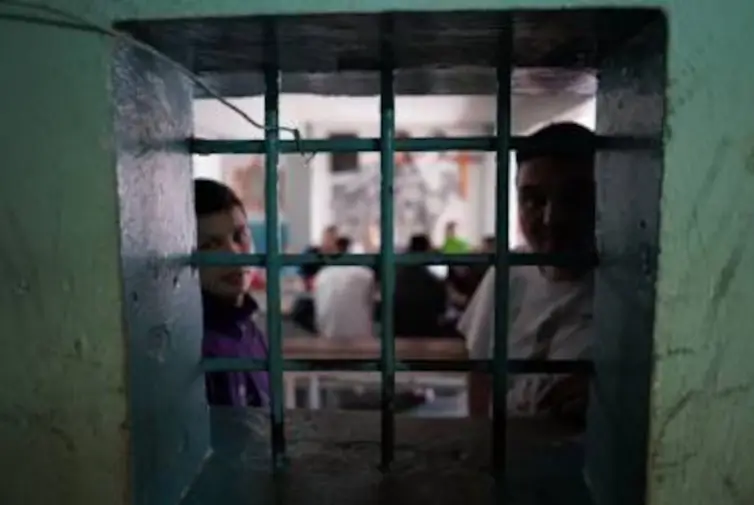
Argentine prisons are already overcrowded. On average, there are 130 people for every 100 places, and in some facilities overcrowding reaches 200–300%. People are held in conditions that human rights advocates have for years described as inhumane.
At the same time, nearly 40% of inmates are behind bars without a court verdict—under pretrial detention (prisión preventiva). Months and years in prison without proven guilt have become a routine practice in Argentina.
Children and prison: expanding the repressive system
Against this backdrop, the authorities are discussing lowering the age of criminal responsibility. It is currently 16, but Congress is considering options of 13–14. The reform is said to be promoted by Security Minister Patricia Bullrich and Justice Minister Mariano Cúneo Libarona.
Critics emphasize that this would mean sending 13-year-old teenagers into overcrowded prisons, often alongside those convicted of serious crimes. In such an environment, a child does not reform—he learns to survive and adopts prison rules.
At 13, a person should be studying, playing, and developing, not sharing a cell with repeat offenders. If a teenager commits an offense, he should be educated and supervised outside prison—through work with the family, psychologists, and, as a last resort, house arrest. Prison for a child is a school of crime.
The Rudnev case: house arrest revoked

Against this backdrop, Konstantin Rudnev’s case is described by the defense and his supporters as an example of how the debate over pretrial detention turns into a matter of life and health.
The court in General Roca overturned the decision to transfer Rudnev to house arrest and upheld the prosecution’s appeal. Attorney Carlos Broitman said he is preparing a cassation appeal.
The defense’s position: key arguments
Broitman said that, in his assessment, the accusation is not supported by evidence. According to him, the only “alleged victim” stated in writing that she does not know Rudnev and does not consider herself harmed.
He also rejected claims about “cocaine,” noting that expert testing found no narcotics and that what was seized turned out to be ordinary medications. In his assessment, the case is “falling apart.”
The defense’s central emphasis is Rudnev’s health: he has lost about 30 kg, serious complications have been recorded, and necessary examinations were not carried out for months, despite doctors’ prescriptions and conclusions about the need for treatment.
Assessing the prosecution’s stance against house arrest, Broitman said: “What do they want—for him to die?”
Prosecutors in the case

The Rudnev case in Bariloche (Río Negro Province) is being handled by prosecutors Oscar Fernando Arrigo (chief federal prosecutor), Tomás Labayle, Gustavo Révora, and Rodrigo Treviranus.
They insisted on revoking house arrest, arguing that there is “no precise diagnosis” and that Rudnev allegedly refused examinations, despite medical reports submitted by the defense documenting severe wasting and the need for hospitalization. According to the defense and the family, this stance results in his continued detention under conditions that endanger the life of a 58-year-old man with serious heart problems.
His wife’s position: “This is being done so he won’t live to be freed”
Rudnev’s wife, Tamara, in public video statements recorded at the gates of the prison in Rawson and published on YouTube and the website konstantinrudnev.blog, describes what is happening as politically motivated persecution.
According to her, the Russian authorities—and Vladimir Putin personally—are interested in ensuring that her husband, as a longtime dissident, does not regain his freedom.
“My husband has become a personal target of the Kremlin,” she claims, linking this to his public criticism of the regime as far back as the early 2000s.
In Rudneva’s account, the goal is not justice, but something else: “so that he won’t live to be freed.”
She claims the pressure is being applied “through others’ hands”—through the position of the Argentine prosecution, which, she says, ignores medical reports, blocks hospitalization, and refuses to hear the defense’s arguments even in the presence of court orders.
“Putin wants to hide Moscow’s hand: to present Konstantin as a cultist so that no one sees a dissident in him,” Tamara says.
She describes how Rudnev lost more than 30 kg, suffers from heart problems, loses consciousness from medications, and needs urgent medical care—access to which, she says, is being blocked.
“They put him in prison for nothing—without evidence, without victims,” she says.
“If this is true, then in peaceful Argentina, in the south of the country, a political order is being carried out to kill a Russian dissident.”
Tamara calls on the international community to intervene, emphasizing that her husband is an elderly, seriously ill man who, she says, is slowly dying in prison.