
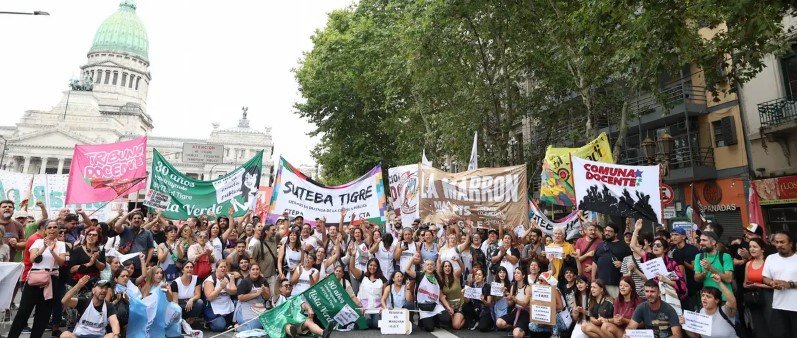
Demonstrators gathered outside Congress to oppose the controversial reform
Thousands of demonstrators gathered outside Argentina’s National Congress as lawmakers approved a labor reform promoted by President Javier Milei, a measure unions say threatens long-standing worker protections.
The Senate approved the bill last week, and the lower house passed it by 135 votes to 115 after an overnight debate. The legislation now returns to the Senate for final approval before it can become law.
Social organizations and unions rallied in Buenos Aires on February 19, voicing opposition to the reform and warning it could erode rights established in Argentina’s labor system since the 1940s.
Why unions oppose the reform
Union leaders argue the bill would significantly weaken worker protections and shift the balance of power toward employers. According to critics, the reform would:
- limit the right to strike
- reduce the bargaining power of unions
- make it easier for companies to dismiss employees
- extend probation periods
- restrict workers’ ability to sue after dismissal
- lower severance payments, traditionally high in Argentina
- allow employers to impose workdays of up to 12 hours instead of eight
The government and its center-right allies support the legislation, arguing it will attract investment and encourage formal employment.
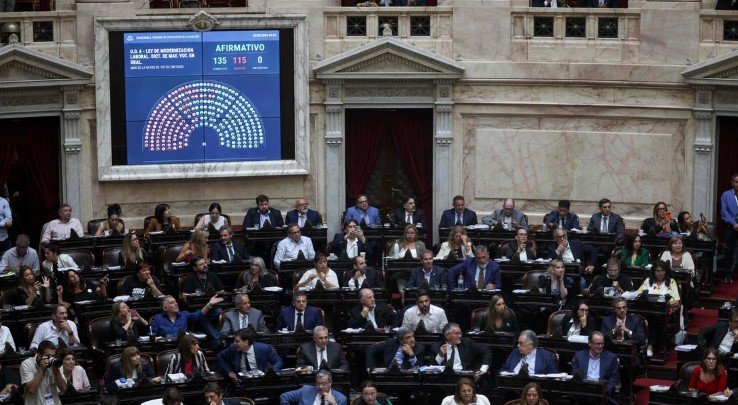
Lawmakers approved the bill with a 135–115 vote in the lower chamber
Nearly 40% of Argentina’s workforce lacks formal contracts. Unions warn the reform could worsen precarious employment, while the government insists it will reduce off-the-books labor and create jobs by lowering employer costs.
The reform aligns with Milei’s austerity program. The president says annual inflation has fallen from about 150% to 32% in two years, though critics note the gains have coincided with public-sector layoffs and declining purchasing power.
General strike halts services and sparks clashes
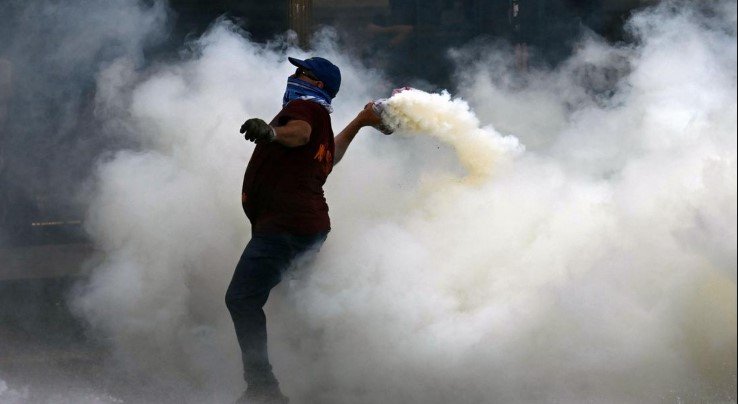
A demonstrator throws back a tear gas canister fired by police
Workers from factories, banks, hospitals, shops, aviation, and public transport joined Thursday’s strike — the fourth general strike since Milei took office in December 2023.
Garbage collectors also stopped work, leaving trash piled up in parts of the capital. Small groups of protesters blocked roads leading into Buenos Aires, while several thousand demonstrators gathered outside Congress.
Public transport disruptions left stations closed and commuters stranded.
Clashes broke out between police and protesters, with officers using tear gas, water cannons and rubber bullets. Some arrests were reported.
Argentina’s powerful CGT labor federation said the strike saw unprecedented participation.
“It has levels of compliance like never before under this government,” union leader Jorge Sola told Radio con Vos, adding that about 90% of activity had stopped.
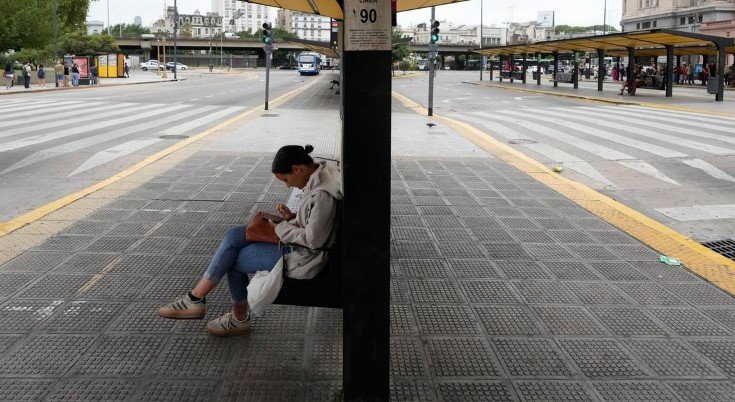
The strike brought public transportation to a standstill